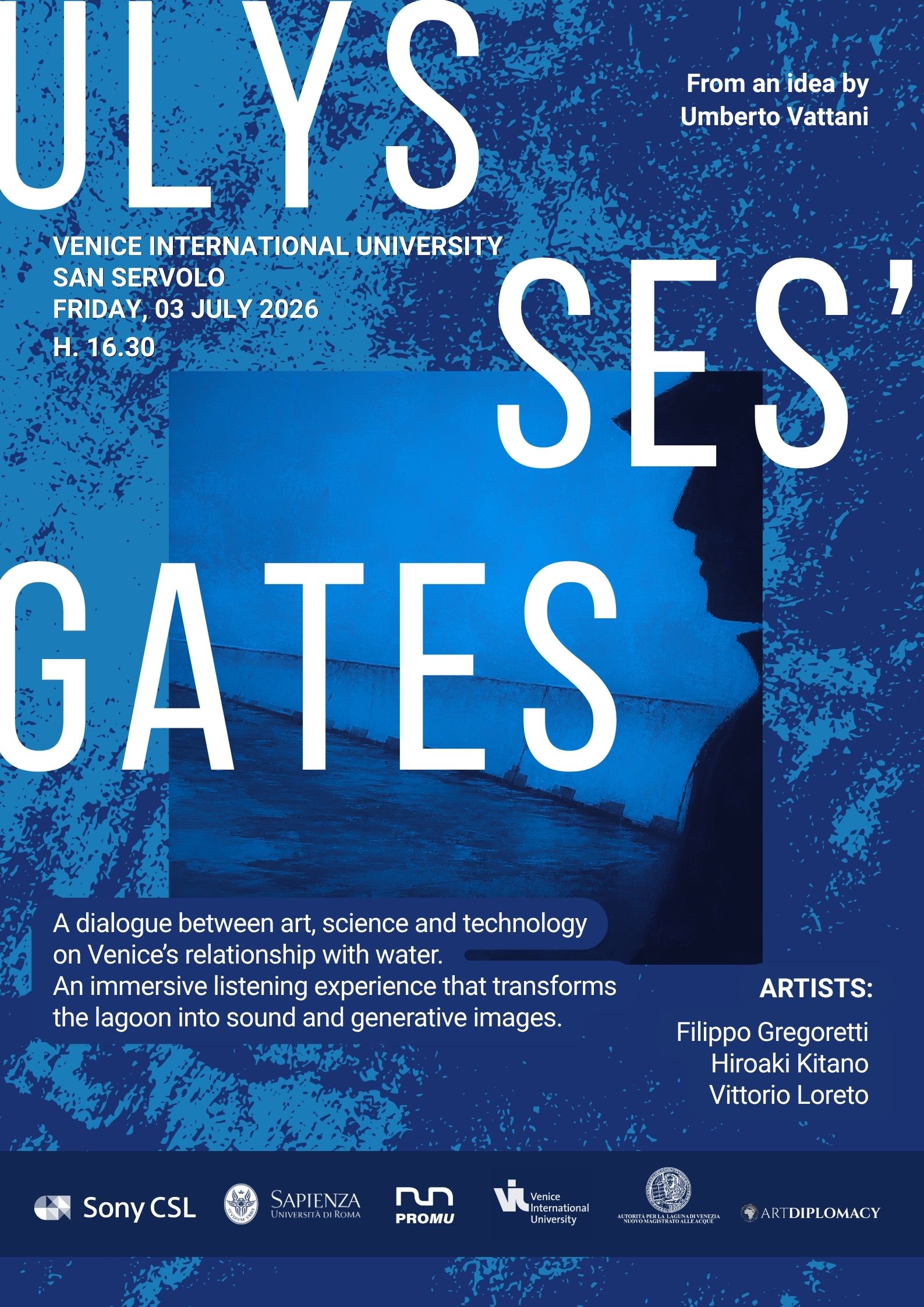
Ulysses’ Gates
EVENTI PASSATI

Ulysses’ Gates
In occasione della Biennale di Venezia 2026, Ulysses’ Gates inaugura il progetto artistico Climate-tides al Ristorante “In Paradiso” di Venezia
8 maggio, ore 10:30
Il progetto, nato da un’idea di Umberto Vattani e realizzato da Filippo Gregoretti, Hiroaki Kitano e Vittorio Loreto, trasforma i dati della laguna, delle maree e del sistema MOSE in un’esperienza immersiva di ascolto dedicata al rapporto tra Venezia e l’acqua.
In occasione della Biennale di Venezia 2026, e in risonanza con il tema In Minor Keys concepito da Koyo Kouoh, prende forma Ulysses’ Gates, primo capitolo di Climate-tides, una serie artistica dedicata alle maree, ai cambiamenti climatici e alle nuove forme di ascolto della natura.
Il progetto nasce da un’idea di Umberto Vattani, presidente della Venice International University e figura di riferimento nel dialogo tra cultura, istituzioni e relazioni internazionali, ed è realizzato da Filippo Gregoretti, artista e musicista transmediale, Hiroaki Kitano, non nuovo ai temi della Biennale grazie alla sua partecipazione, nel 2000, alla Biennale di Architettura di Venezia diretta da Massimiliano e Doriana Fuksas sul tema Less Aesthetics, More Ethics, punto di riferimento nei campi dell’intelligenza artificiale e della robotica, Presidente e CEO di Sony Computer Science Laboratories (Sony CSL), Chief Technology Fellow di Sony Group Corporation e Professore all’Okinawa Institute of Science and Technology (OIST), e Vittorio Loreto, ordinario di Fisica dei Sistemi Complessi presso Sapienza Università di Roma, direttore di Sony CSL – Rome e scienziato impegnato nello studio delle dinamiche dell’innovazione, della creatività e dei fenomeni emergenti.
In un dialogo tra arte, scienza e tecnologie generative, Ulysses’ Gates unisce composizione sonora e visiva, performance, teoria della complessità e dati ambientali per trasformare i fenomeni della laguna in un’esperienza sensibile.
A Venezia, città simbolo del fragile e millenario rapporto tra civiltà e acqua, Climate-tides trova il suo punto di partenza ideale. Qui l’acqua è protezione, minaccia, memoria e dialogo: una presenza da osservare, comprendere e ascoltare.
Ulysses’ Gates traduce dati storici e contemporanei sulle maree, sull’evoluzione climatica e sul sistema MOSE in suono e immagini generative. L’opera rende percepibile ciò che normalmente resta invisibile: la relazione continua tra il mare che avanza, la città che resiste e la tecnologia che interviene per ristabilire una soglia di equilibrio.
Il titolo richiama la figura di Ulisse come simbolo di intelligenza, adattamento e vigilanza. Il MOSE viene interpretato non solo come infrastruttura tecnica, ma anche come soglia simbolica: una difesa invisibile che protegge Venezia senza separarla definitivamente dal mare. Una risposta necessaria, ma non conclusiva, che invita a proseguire nell’ascolto delle acque e dei segnali della natura.
Il progetto sarà presentato venerdì 8 maggio alle 10:30, presso il Ristorante “In Paradiso”, Giardini della Biennale, Riva degli Schiavoni 1260, 30122 Venezia. La presentazione è aperta al pubblico.
Con Ulysses’ Gates, Venezia diventa non solo il luogo dell’opera, ma il simbolo di una domanda globale: come possiamo proteggere senza dominare, intervenire senza cancellare, e ascoltare la natura prima che i suoi segnali diventino emergenza?
Crediti
Da un’idea di
Umberto Vattani (Presidente della Venice International University)
Artisti
Filippo Gregoretti, Hiroaki Kitano, Vittorio Loreto
Field Recordings
Gianluca Ferranti
Communication and Cultural Managers
Milena Di Canio, Yoko Honjo
Administration and Logistics
Cinzia Di Salvio
Sponsor
Promu - Musica ed Eventi
Supported by
Sony Computer Science Laboratories (Sony CSL)
Sapienza Università di Roma
Venice International University
Autorità per la Laguna di Venezia
ArtDiplomacy
Ristorante “In Paradiso” - Venezia
Per info:
Milena Di Canio ([email protected])
+39 3490707850

Ulysses’ Gates
PAST EVENTS
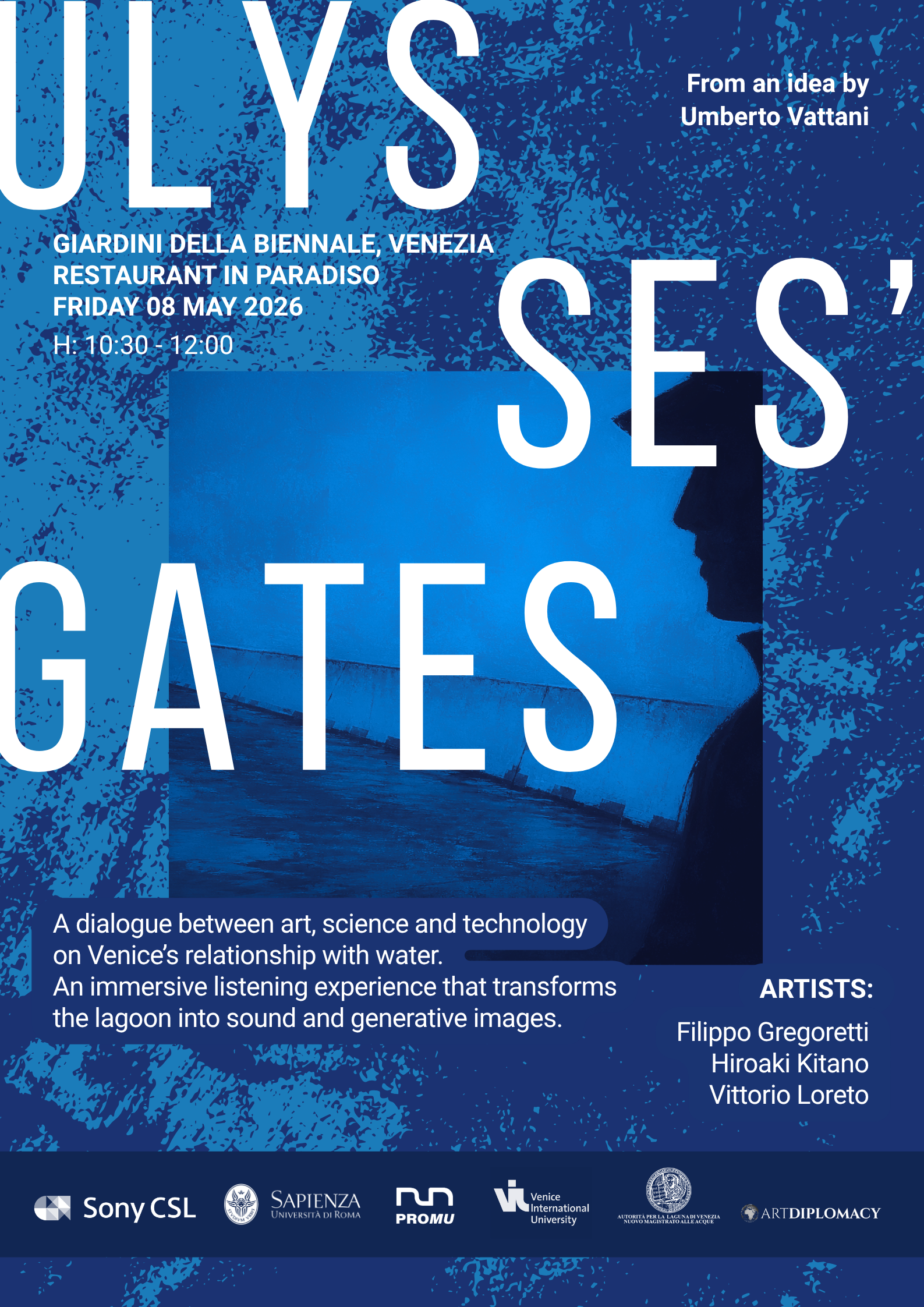
Ulysses’ Gates
On the occasion of the 2026 Venice Biennale, Ulysses’ Gates inaugurates the artistic project Climate-tides at the Restaurant “In Paradiso” in Venice
8 maggio, ore 10:30
The project, stemming from an idea by Umberto Vattani and created by Filippo Gregoretti, Hiroaki Kitano and Vittorio Loreto, transforms data from the lagoon, the tides and the MOSE system into an immersive listening experience dedicated to the relationship between Venice and water.
On the occasion of the 2026 Venice Biennale, and in resonance with the theme In Minor Keys conceived by Koyo Kouoh, Ulysses’ Gates takes shape as the first chapter of Climate-tides, an artistic series dedicated to tides, climate change and new forms of listening to nature.
The project stems from an idea by Umberto Vattani, President of Venice International University and a leading figure in the dialogue between culture, institutions and international relations, and is created by Filippo Gregoretti, transmedial artist and musician; Hiroaki Kitano, no stranger to the themes of the Biennale thanks to his participation, in 2000, in the Venice Architecture Biennale directed by Massimiliano and Doriana Fuksas under the theme Less Aesthetics, More Ethics, and a leading figure in the fields of artificial intelligence and robotics, President and CEO of Sony Computer Science Laboratories (Sony CSL), Chief Technology Fellow of Sony Group Corporation and Professor at the Okinawa Institute of Science and Technology (OIST); and Vittorio Loreto, Professor of Physics of Complex Systems at Sapienza University of Rome, Director of Sony CSL – Rome, and a scientist engaged in the study of the dynamics of innovation, creativity and emergent phenomena.
In a dialogue between art, science and generative technologies, Ulysses’ Gates brings together sound and visual composition, performance, complexity theory and environmental data to transform the phenomena of the lagoon into a sensory experience.
In Venice, a city that symbolises the fragile and millennia-old relationship between civilisation and water, Climate-tides finds its ideal starting point. Here, water is protection, threat, memory and dialogue: a presence to be observed, understood and listened to.
Ulysses’ Gates translates historical and contemporary data on tides, climate evolution and the MOSE system into sound and generative images. The work makes perceptible what normally remains invisible: the continuous relationship between the advancing sea, the city that resists, and the technology that intervenes to restore a threshold of balance.
The title evokes the figure of Ulysses as a symbol of intelligence, adaptation and vigilance. The MOSE is interpreted not only as a technical infrastructure, but also as a symbolic threshold: an invisible defence that protects Venice without definitively separating it from the sea. It is a necessary, but not conclusive response, one that invites us to continue listening to the waters and to the signals of nature.
The project will be presented on Friday, 8 May, at 10:30 a.m., at the Restaurant “In Paradiso”, Giardini della Biennale, Riva degli Schiavoni 1260, 30122 Venice. The presentation is open to the public.
With Ulysses’ Gates, Venice becomes not only the site of the work, but the symbol of a global question: how can we protect without dominating, intervene without erasing, and listen to nature before its signals become an emergency?
Credits
Idea of
Umberto Vattani (President of Venice International University)
Artists
Filippo Gregoretti, Hiroaki Kitano, Vittorio Loreto
Field Recordings
Gianluca Ferranti
Communication and Cultural Managers
Milena Di Canio, Yoko Honjo
Administration and Logistics
Cinzia Di Salvio
Sponsor
Promu - Musica ed Eventi
Supported by
Sony Computer Science Laboratories (Sony CSL)
Sapienza University of Rome
Venice International University
Autorità per la Laguna di Venezia
ArtDiplomacy
Ristorante “In Paradiso” - Venezia
More info:
Milena Di Canio ([email protected])
+39 3490707850